



A high bounce rate is one of the most common challenges businesses face when trying to improve website performance. If visitors land on your website and leave without taking any action, it could indicate issues with user experience, content relevance, page speed, or overall website design. Understanding why users bounce and implementing the right fixes can significantly improve engagement, conversions, and revenue.
At Digicode Technologies, we help businesses optimize their websites to keep visitors engaged and convert traffic into customers. Here’s everything you need to know about bounce rates, industry benchmarks, and proven ways to reduce them.
What Is Bounce Rate?
Bounce rate refers to the percentage of visitors who leave a website after viewing only one page without interacting further. A high bounce rate often suggests that visitors didn’t find what they were looking for or encountered obstacles that prevented them from continuing their journey.
For example, if 1,000 users visit a landing page and 600 leave without clicking another page or taking any action, the bounce rate is 60%.
Average Bounce Rate Benchmarks in 2026
While bounce rates vary across industries, these general benchmarks can help businesses evaluate their performance:
- Excellent: 25% – 40%
- Good: 41% – 55%
- Average: 56% – 70%
- Needs Improvement: Above 70%
Typical industry averages:
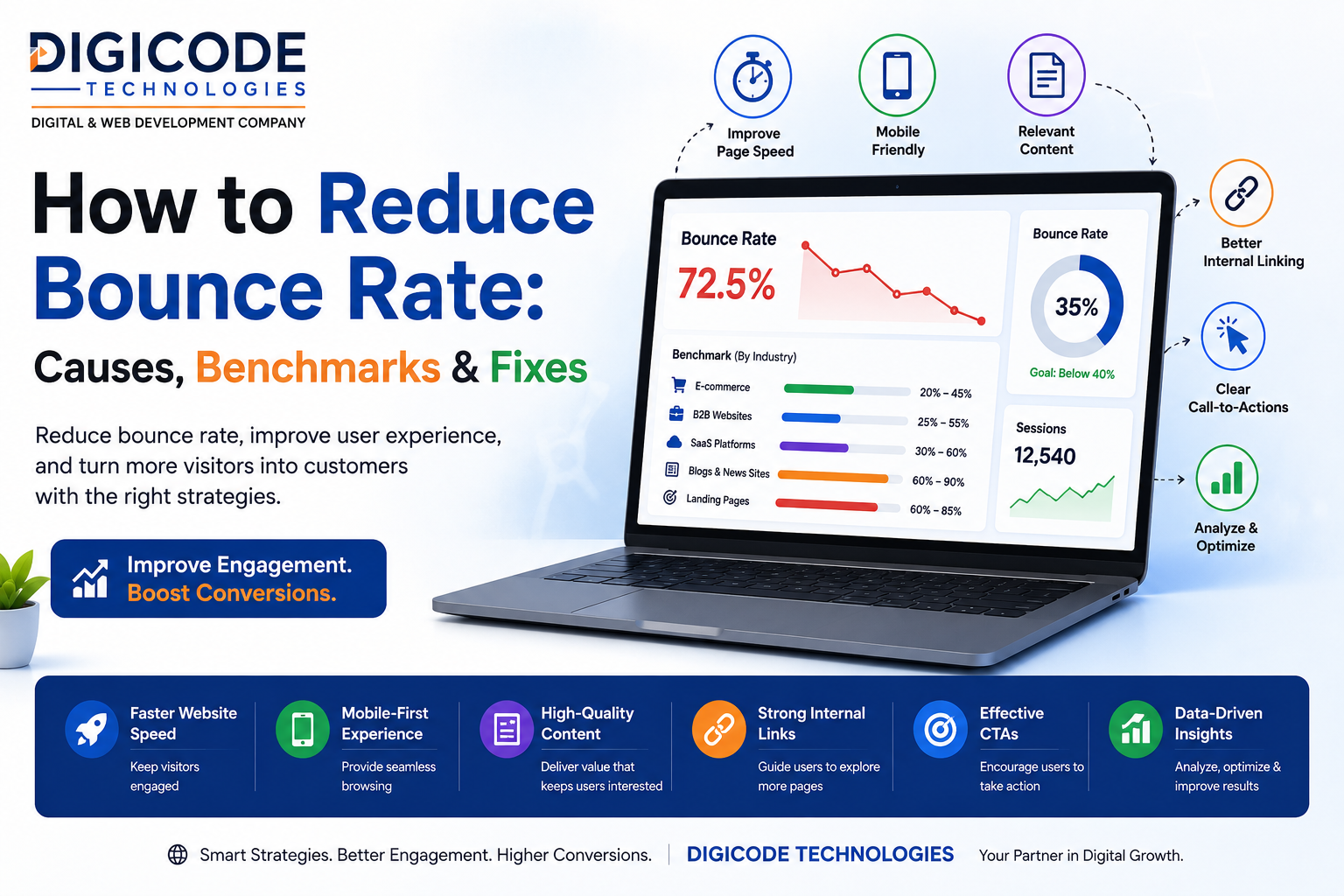
- E-commerce Websites: 20% – 45%
- B2B Websites: 25% – 55%
- SaaS Platforms: 30% – 60%
- Blogs & News Sites: 60% – 90%
- Landing Pages: 60% – 85%
It’s important to analyze bounce rates within the context of your website goals rather than relying solely on industry averages.
Common Causes of High Bounce Rates
1. Slow Website Loading Speed
Modern users expect websites to load within seconds. Even a small delay can lead to visitor frustration and abandonment.
Common speed issues include:
- Large image files
- Unoptimized code
- Poor hosting infrastructure
- Excessive plugins
2. Poor Mobile Experience
With most web traffic now coming from mobile devices, websites that aren’t mobile-friendly often experience significantly higher bounce rates.
Common problems include:
- Difficult navigation
- Small text
- Unresponsive layouts
- Slow mobile performance
3. Mismatch Between Content and User Intent
Visitors leave quickly when the content doesn’t match their expectations. This often happens when ads, social media posts, or search results promise something different from what’s delivered on the landing page.
4. Weak User Experience (UX)
Complicated navigation, cluttered layouts, intrusive pop-ups, and confusing page structures can discourage users from exploring further.
5. Poor Content Quality
Content that lacks value, clarity, or relevance fails to capture user attention. Visitors need immediate answers to their questions and clear reasons to stay engaged.
6. Lack of Clear Calls-to-Action (CTAs)
If users don’t know what action to take next, they often leave. Every page should guide visitors toward a specific goal, whether it’s contacting your team, requesting a quote, or exploring another page.
Effective Ways to Reduce Bounce Rate
Improve Website Speed
Fast-loading websites create better first impressions and improve user retention.
Best practices include:
- Compressing images
- Using caching techniques
- Optimizing code
- Choosing reliable hosting
- Implementing a Content Delivery Network (CDN)
Optimize for Mobile Users
Ensure your website provides a seamless experience across all devices.
Focus on:
- Responsive design
- Mobile-friendly navigation
- Fast-loading mobile pages
- Easy-to-read content
Create High-Quality Content
Engaging content encourages visitors to spend more time on your website.
Content should:
- Address user needs
- Provide actionable insights
- Be easy to read
- Include visuals and examples
- Offer clear next steps
Strengthen Internal Linking
Guide visitors to relevant pages throughout your website.
Examples include:
- Related blog posts
- Service pages
- Case studies
- Product pages
- Resource centers
Strong internal linking increases page views and improves user engagement.
Improve Website Design
A clean, professional design builds trust and encourages exploration.
Key elements include:
- Simple navigation
- Clear page hierarchy
- Consistent branding
- Easy-to-find information
- Minimal distractions
Use Strategic Calls-to-Action
Every page should provide visitors with a logical next step.
Examples:
- Request a Consultation
- Download a Guide
- Contact Our Team
- View Our Services
- Get a Free Quote
Analyze User Behavior
Tools such as heatmaps, session recordings, and analytics platforms help identify where users drop off and what improvements are needed.
By understanding user behavior, businesses can make data-driven decisions that improve engagement and conversions.
Why Bounce Rate Matters for Business Growth
Reducing bounce rate isn’t just about keeping visitors on your website longer. It directly impacts:
- Lead generation
- Conversion rates
- Search engine rankings
- Customer engagement
- Return on marketing investment (ROI)
When visitors engage with more pages and spend more time on your site, they’re more likely to become customers.
How Digicode Technologies Can Help
At Digicode Technologies, we specialize in designing and optimizing websites that deliver exceptional user experiences and measurable business results. Our team combines web development, UX design, SEO, performance optimization, and digital marketing expertise to help businesses reduce bounce rates and increase conversions.
Whether you need a faster website, better user experience, improved content strategy, or conversion-focused landing pages, we provide solutions that turn website traffic into business growth.
Conclusion
A high bounce rate is often a sign that your website isn’t meeting visitor expectations. By identifying the root causes and implementing strategic improvements, businesses can create engaging digital experiences that encourage users to stay, explore, and convert.
In 2026, websites that prioritize speed, usability, content quality, and user experience will outperform competitors and achieve sustainable growth. Reducing your bounce rate is one of the most effective steps you can take toward improving overall website performance and maximizing digital marketing success.